
Wall systems
Shower wall panels
Grout is the reason bathrooms look tired after five years. It stains, it cracks, and it grows things nobody wants to think about. These panels give you the look of tile and natural stone in a surface you clean with a sponge and never seal again.
The short answer
Three ranges. Triple gel coat is the hardest, deepest finish we build. Natural stone style reproduces marble, slate and limestone. PVC tile style gives you subway and tile patterns with no grout lines in them. A plain smooth finish is also available and is the value option.
All of them are solid surface with full reinforced backing, so grab bars mount at the height that suits the person rather than wherever a stud lands. Choose a single backwall for a seamless look, or a split backwall if the panels have to get up a staircase.
Beyond the standard range we match custom colors, mould accent bands and backsplashes into the surround, and integrate real tile where you want it.
The three ranges
Pick the surface, then pick the pattern.
These are not just cosmetic tiers. They differ in how the finish is built up, how it behaves over years of daily use, and how it reads in a small room.
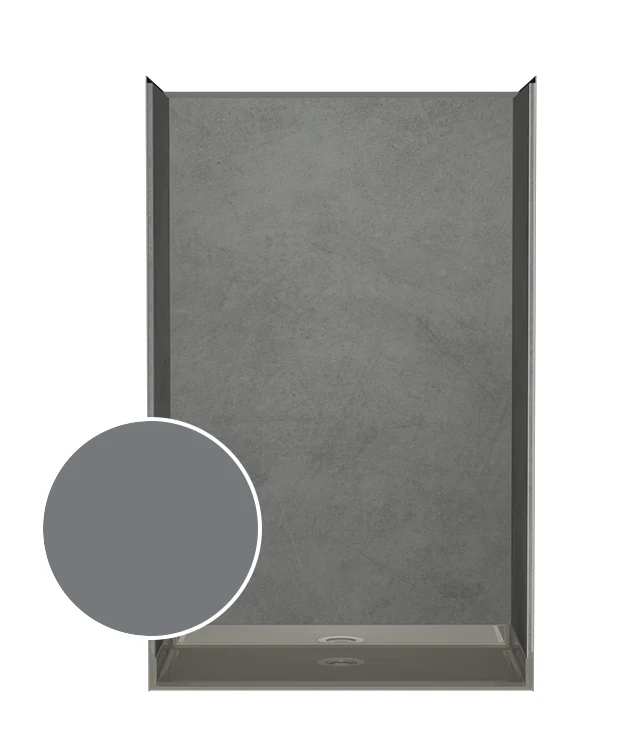
Range 01
Triple gel coat
The finish is built up in three coats rather than one, which gives the hardest surface we make and the deepest, most consistent color.
- Hardest wearing of the three
- Richest, most even color
- Resists staining and scuffing
- Best choice for heavy daily use
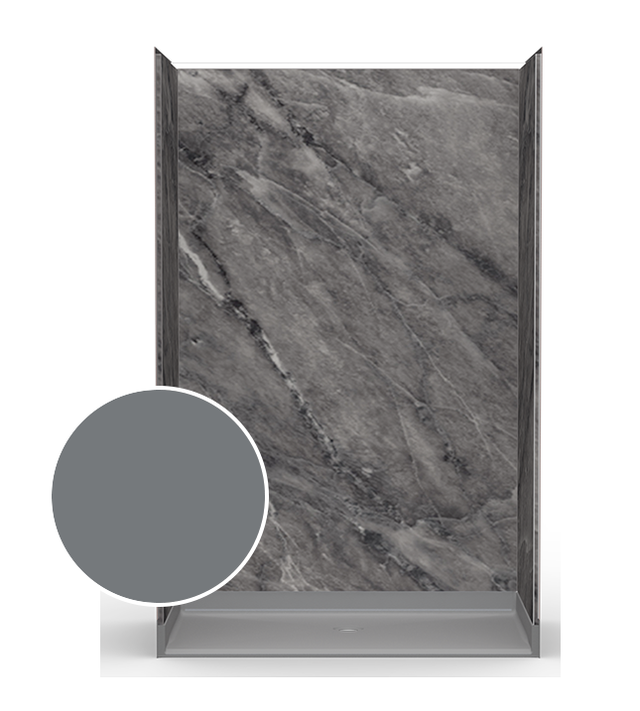
Range 02
Natural stone style
Marble, slate and limestone reproduced with real depth and movement in the veining, without the cost, weight or sealing of actual stone.
- White marble, grey marble, grey slate, limestone
- Never needs sealing, unlike real stone
- No grout lines through the pattern
- Large format, so the room reads bigger
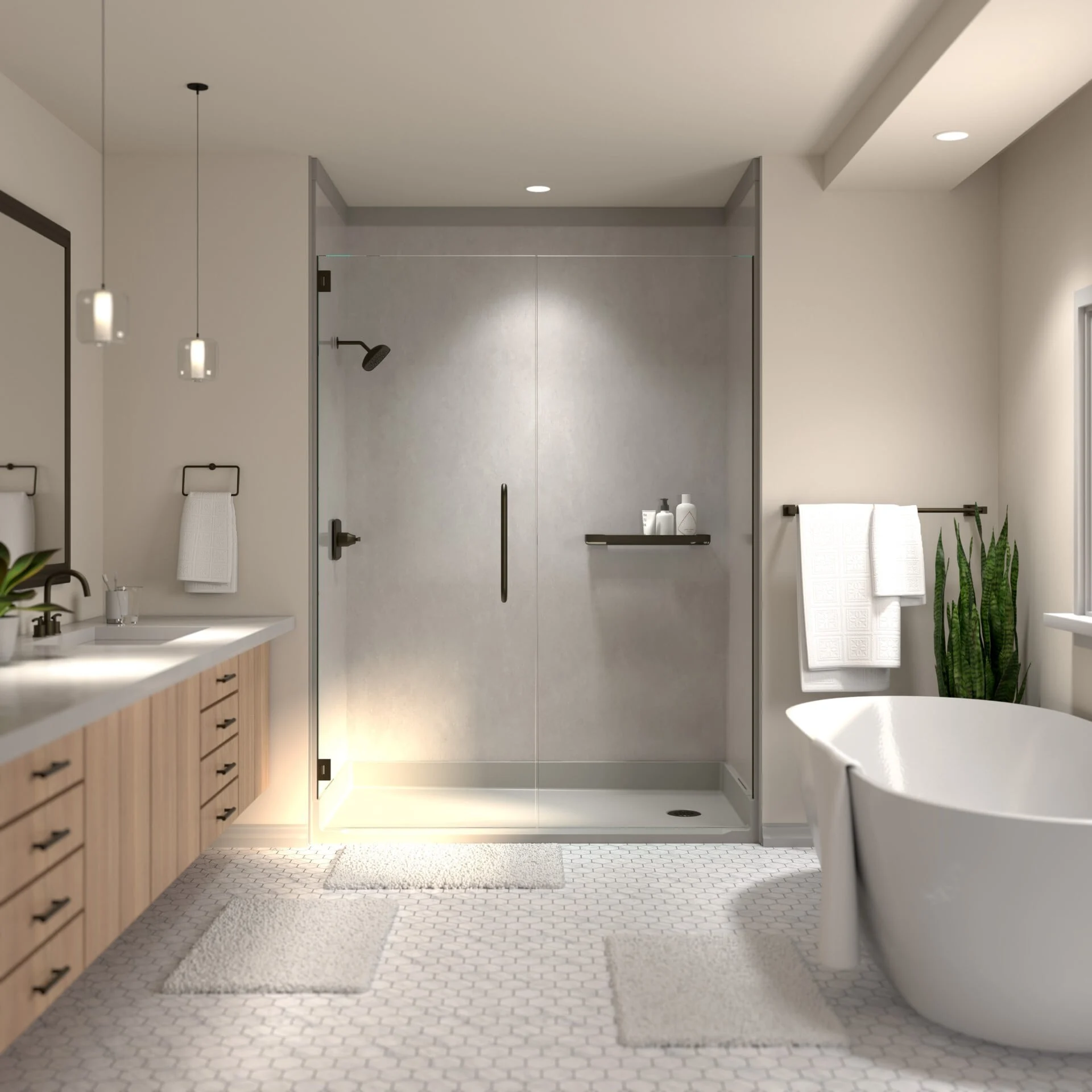
Range 03
PVC tile style
The classic tiled look, moulded into the panel. You get the pattern and the shadow lines without a single line of grout to scrub or reseal.
- Subway, 4″ tile and 8″ tile patterns
- Traditional look, modern maintenance
- Popular in period and cottage bathrooms
- Smooth finish also available
Stone-look finishes
Four stones, up close.
These are photographed at panel scale so you can see the actual veining rather than a thumbnail. In a small bathroom, the amount of movement in the pattern changes the room more than the color does.
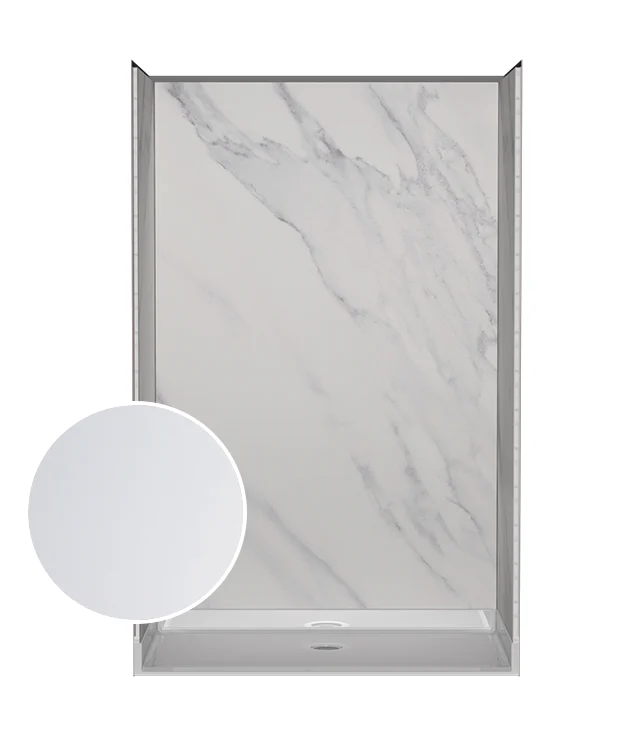
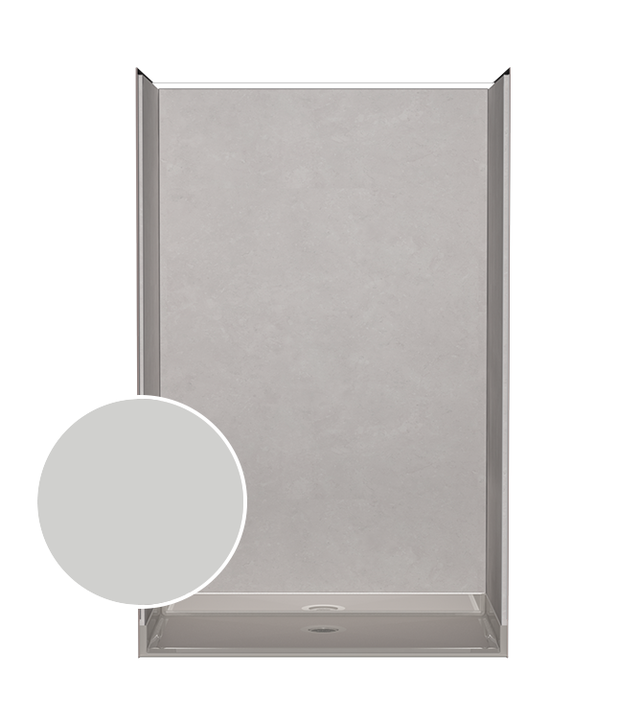
Want something not shown here? We match custom colors. Bring us a vanity door, a floor tile or a paint reference and we will work to it.
Single or split
The choice that decides whether it reaches the bathroom.
This looks like an aesthetic decision and is actually a logistics one. Get it wrong and the panels arrive but cannot physically get up your stairs.
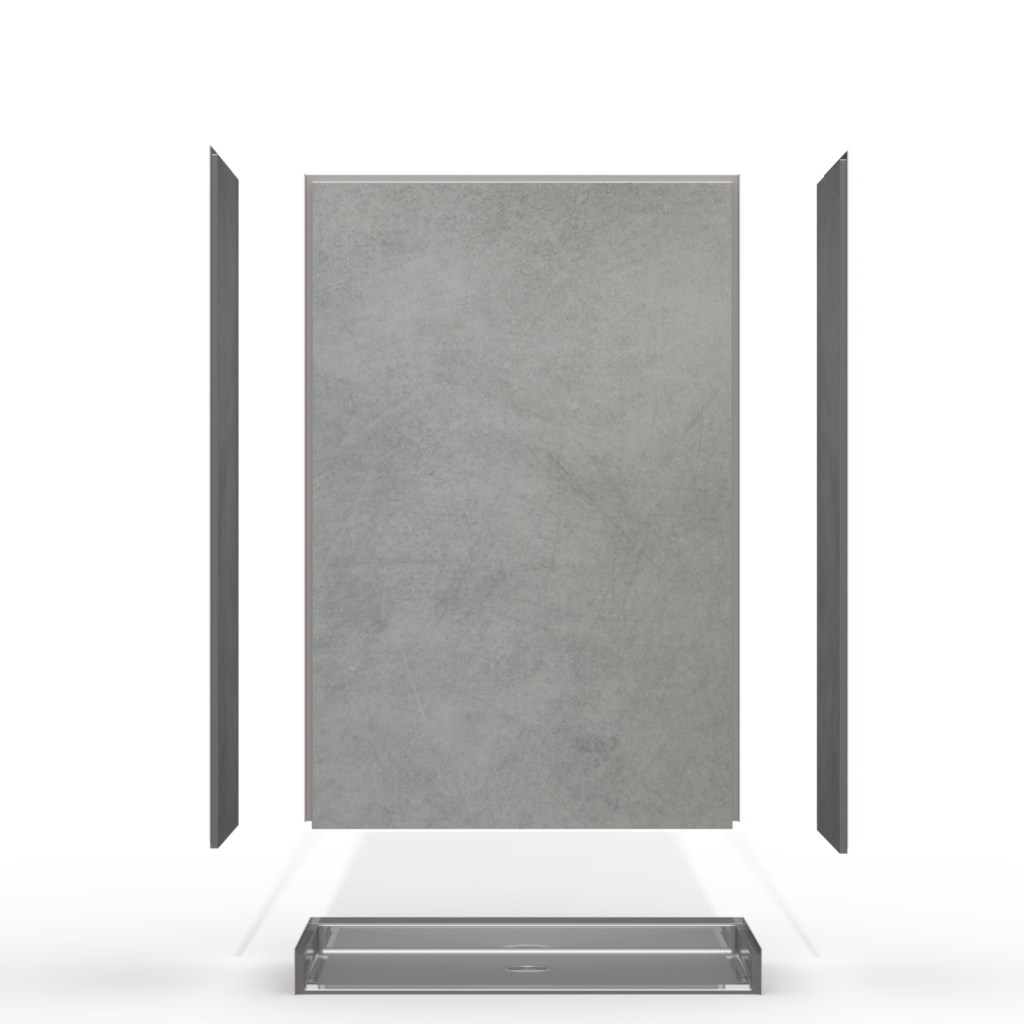
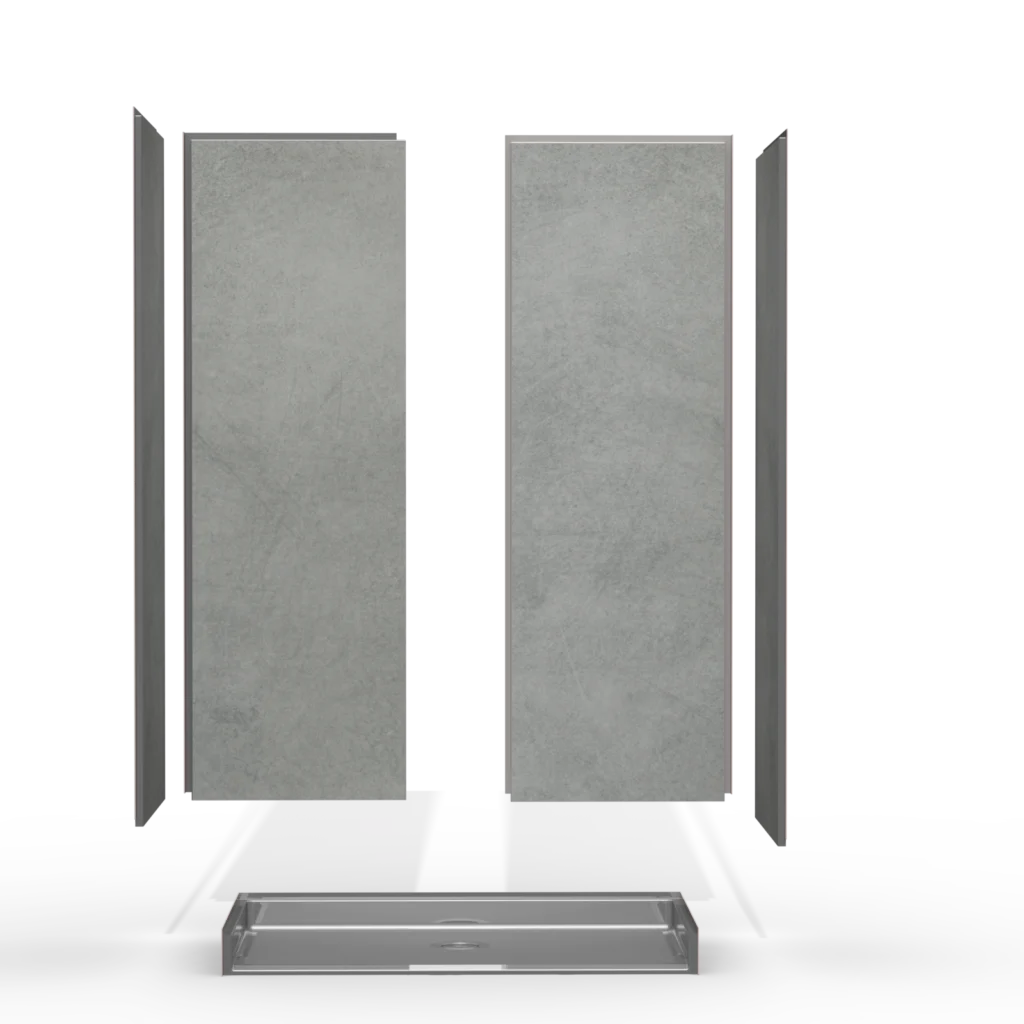
| Single backwall | Split backwall | |
|---|---|---|
| Appearance | One uninterrupted panel, no vertical seam behind the fixtures | A single vertical joint down the back wall, sealed on install |
| Getting it in | Needs a clear, mostly straight path from the entrance | Clears standard doorways, stair turns and tight landings |
| Best for | Ground-floor bathrooms, new builds, gut renovations | Upstairs bathrooms, apartments, older homes with narrow halls |
| Handling | Two people and some planning | Considerably easier for one or two people |
| Cleaning | Nothing at all across the back wall | One sealed joint, wiped like any other surface |
How to decide in thirty seconds: measure the narrowest point between your front door and the bathroom — usually a doorway or the turn at the top of a staircase. If that number worries you at all, choose split. The sealed joint is genuinely unobtrusive, and it is a much better outcome than a panel stuck on a landing.
Beyond the catalogue
Custom color, accent bands and real tile.
Panel systems have a reputation for looking like panel systems. That is a fair criticism of the cheap ones. It stops being true the moment you can change the color, mould a feature band into the surround, or combine the panels with genuine tile.
- Custom colors. Matched to a vanity, a floor, or a color you have already committed to elsewhere in the room.
- Backsplash and accent bands. Moulded into the wall system rather than applied on top, so there is no lip and no edge to catch dirt.
- Real tile integration. Genuine tile or stone combined with the solid surface system — the look you want where it shows, easy-clean everywhere else.
- Custom wall heights. For low ceilings, sloped ceilings and soffits. Measure floor to ceiling and tell us.
- Custom dimensions. Panels built to any width and depth, to match a custom pan or an opening that fits nothing standard.
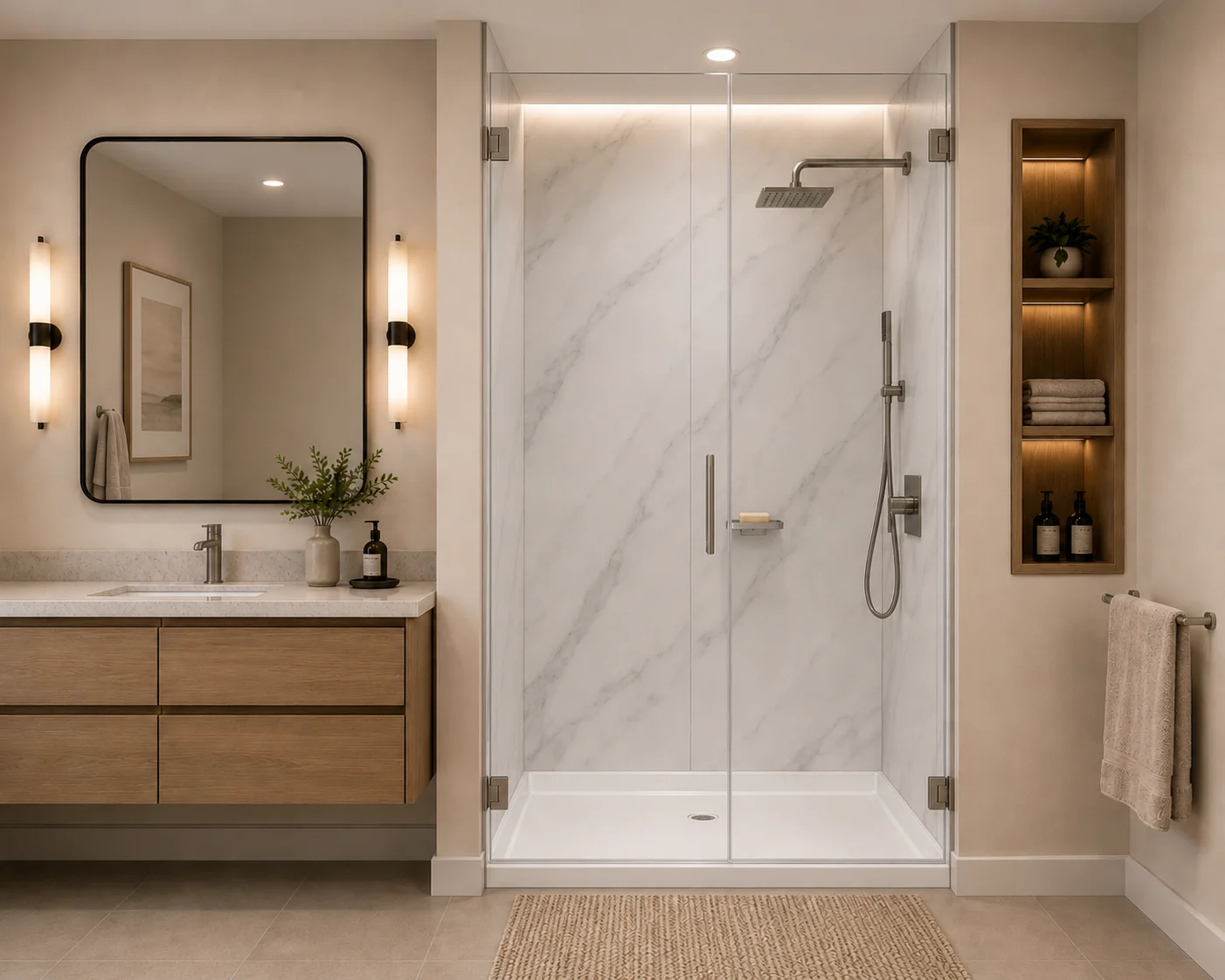
Panels versus tile
An honest comparison, including where tile wins.
We sell panels, so treat this with appropriate suspicion. But there are real cases where tile is the right answer, and you should know what they are before you spend anything.
| Solid surface panels | Ceramic or stone tile | |
|---|---|---|
| Grout | None anywhere. Nothing to reseal, ever. | Needs periodic sealing, and stains and cracks over time. |
| Installation time | Typically one day, one crew. | Six to ten working days across several trades. |
| Cost | Substantially lower, mostly because factory waterproofing replaces on-site labour. | Substantially higher. Labour is 40 to 60 percent of the job. |
| Cleaning | Sponge and ordinary bathroom cleaner. | Grout brushing, mildew treatment, resealing. |
| Grab bar mounting | Full reinforced backing, so bars go anywhere. | Blocking must be planned before the tile goes on. |
| Design freedom | Wide, but within a defined range of finishes and formats. | Effectively unlimited. This is where tile genuinely wins. |
| Repair | Panels are replaced as a section. | Individual tiles can be swapped, if you kept spares. |
When we would tell you to tile: if the design is the whole point — a specific handmade tile, a mosaic, an unusual geometry — and the budget and timeline can carry it. For everyone else, and particularly for anyone who wants a shower that still looks new in ten years with no maintenance, panels are the better purchase. And if you want a bit of both, we integrate real tile into the panel system.
Keep going
The rest of the shower.
Shower pans
Threshold heights, drain positions and why a water stopper matters on a barrier-free pan.
Shower pansSizes & builder
All 34 footprints, how to measure, and a configurator that specs your exact kit.
Shower sizesWall panel questions
What people ask about walls.
Call 1-888-779-2284 and we will help you choose a finish that suits the room.
What are shower wall panels made of?
Our wall systems are craftsman-built from reinforced fiberglass with a polyester gelcoat finish, in triple gel coat, natural stone style and PVC tile style ranges. All of them are solid surface, which means no grout lines anywhere and nothing to reseal. They are made in the USA and carry a 30-year limited warranty.
Are shower wall panels better than tile?
For most bathrooms, yes, and grout is the reason. Grout stains, cracks and harbours mildew, which is why tiled showers start looking tired after about five years and need periodic resealing. A panel system wipes clean with a sponge and ordinary bathroom cleaner. Tile still wins on total design freedom, which is why we also integrate real tile into panel systems when someone wants a specific look.
What is the difference between triple gel coat and PVC tile style panels?
Triple gel coat refers to the depth of the finish built up on the panel, giving the hardest, most durable surface we make and the richest color. PVC tile style panels are moulded with a tile pattern such as subway, 4 inch or 8 inch, so you get the look of tile without any grout. Natural stone style sits alongside both, reproducing marble, slate and limestone.
What finishes and colors are available?
Stone-look finishes include white marble, grey marble, grey slate and limestone. Tile patterns include subway, 4 inch tile and 8 inch tile. A smooth finish is available and is the value option. Beyond the standard range we match custom colors, so panels can be coordinated with a vanity, a floor tile, or a color you have already chosen.
What is the difference between a single backwall and a split backwall?
A single backwall is one uninterrupted panel with no vertical seam behind the fixtures. A split backwall arrives as two narrower sections. The difference matters for access rather than looks: split panels fit up tight stairwells, around corners and through doorways a full sheet will not clear. If your bathroom is upstairs or down a hallway with a turn in it, choose split.
Can real tile be combined with the wall panels?
Yes. We can work genuine tile or stone into the wall system, including accent bands and a backsplash moulded into the surround rather than stuck on afterward. That gives you a real tile look in the places that show, with an easy-clean solid surface everywhere else and far less grout to maintain.
Can I buy wall panels without a shower pan?
Yes. If your existing base is sound and the tile around it has failed, replacing only the walls saves considerable money and disruption. Panels are available in two-piece, three-piece and split backwall configurations to suit the opening you already have.
Do the wall panels support grab bars?
Yes, and this is one of the most useful things about them. Full reinforced backing runs through the panels, so a grab bar can be mounted at the height that suits the person using the shower rather than wherever a stud happens to fall. If someone's needs change later, the wall is already prepared.
How tall are the wall panels?
Standard wall systems run to roughly 80 to 82 inches tall depending on configuration. If you have a low ceiling, a sloped ceiling or a soffit in the way, we make custom wall heights, so measure floor to ceiling inside the alcove and give us the number.
How do you clean solid surface shower walls?
A sponge and ordinary bathroom cleaner. There is no grout to scrub and nothing to reseal. Avoid abrasive pads and scouring powders, because those will dull the gelcoat over time. That is genuinely the whole maintenance routine.
Will the wall panels fit through my door?
Panels are supplied in sections rather than as one piece, and a split backwall breaks the largest panel into two narrower ones specifically so it can clear doorways, stair turns and tight landings. Measure the narrowest point on the route from your entrance to the bathroom and tell us that number.
Do I need to remove the old tile first?
In most cases yes, because the panels need to sit against a sound, flat substrate and the finished shower needs to end up the right size. Your installer will assess what is behind the tile at the same time, which is worth doing anyway since a shower that has been leaking will usually have damage nobody has seen.
Get your quote
Tell us the room. We will tell you what fits.
Send your measurements and we will come back with the sizes that work, the threshold height we would recommend, and a price. If you want it installed, say so and we will quote that too.
Not sure how to measure? Do not worry about being precise on the first pass. Give us rough numbers and a photo, and we will tell you exactly what to measure next.
Rather just talk?
1-888-779-2284A real person answers, and they know the product. No call center, no script.
Let's find the shower that fits.
Bring us a measurement and a rough idea. We will handle the rest, and we will tell you honestly if a different product suits you better.
1-888-779-2284